
Starting a One-Acre Garden: How You Can Feed Your Family & Have Extra to Share
Starting a one-acre garden that can feed your family and provide enough extra to sell at a farmers market or in your community? That’s next-level homesteading.
One acre might not seem like much when compared to massive farms, but let me tell you—an acre is a LOT of dirt when you’re the one responsible for keeping it weeded, watered, and producing. If you do it right, though, that one acre can provide fresh, nutrient-dense food for your family, with plenty of extra produce to sell and even a little room for farm experiments (the kids will love this).
But before you start ordering every heirloom seed known to man, let’s talk about how to set up a one-acre garden that works smarter, not harder—because there’s nothing fun about growing an entire field of zucchini only to realize nobody in your house actually likes zucchini.

Step 1: The Soil—Where Dreams Are Made or Crushed 🌱🌿
If you take nothing else from this post, remember this: Your garden is only as good as your soil.
So before you even think about planting, get to know your dirt.
Soil Testing: Yes, You Actually Have to Do It
You can grab a soil test kit from your local extension office (find out where yours is here - every county in the country has one!) or order one online.
It will tell you what your soil is lacking (or has too much of) in terms of nutrients.
You’ll learn about pH levels—most veggies like soil in the 6.0-7.0 range (slightly acidic to neutral).
If your soil isn’t that great, don’t panic. That’s what compost, manure, and cover crops are for. Speaking of which…
Building Healthy Soil: More Important Than Fancy Fertilizer
Compost: Start a compost pile NOW. Your garden will love it.
Manure: If you have livestock (hello, Highland cows, pigs, and chickens!), their manure is gold—just make sure to compost it before using it, so it doesn’t burn your plants.
Cover Crops: If your soil is really bad, planting cover crops like clover, rye, or buckwheat can improve it over time.
Basically, treat your soil well, and it will take care of you. Ignore it, and you’ll be wondering why your tomatoes look like sad little twigs by July.
Step 2: Planning Your One-Acre Garden Without Losing Your Mind
How Much Should You Grow?
Before you plant anything, figure out:
How much your family actually eats
What sells well at the Farmers Market (hint: tomatoes, greens, and root veggies are always on demand)
Crop Selection: The Smart Way to Choose
Here’s a simple way to break it down:
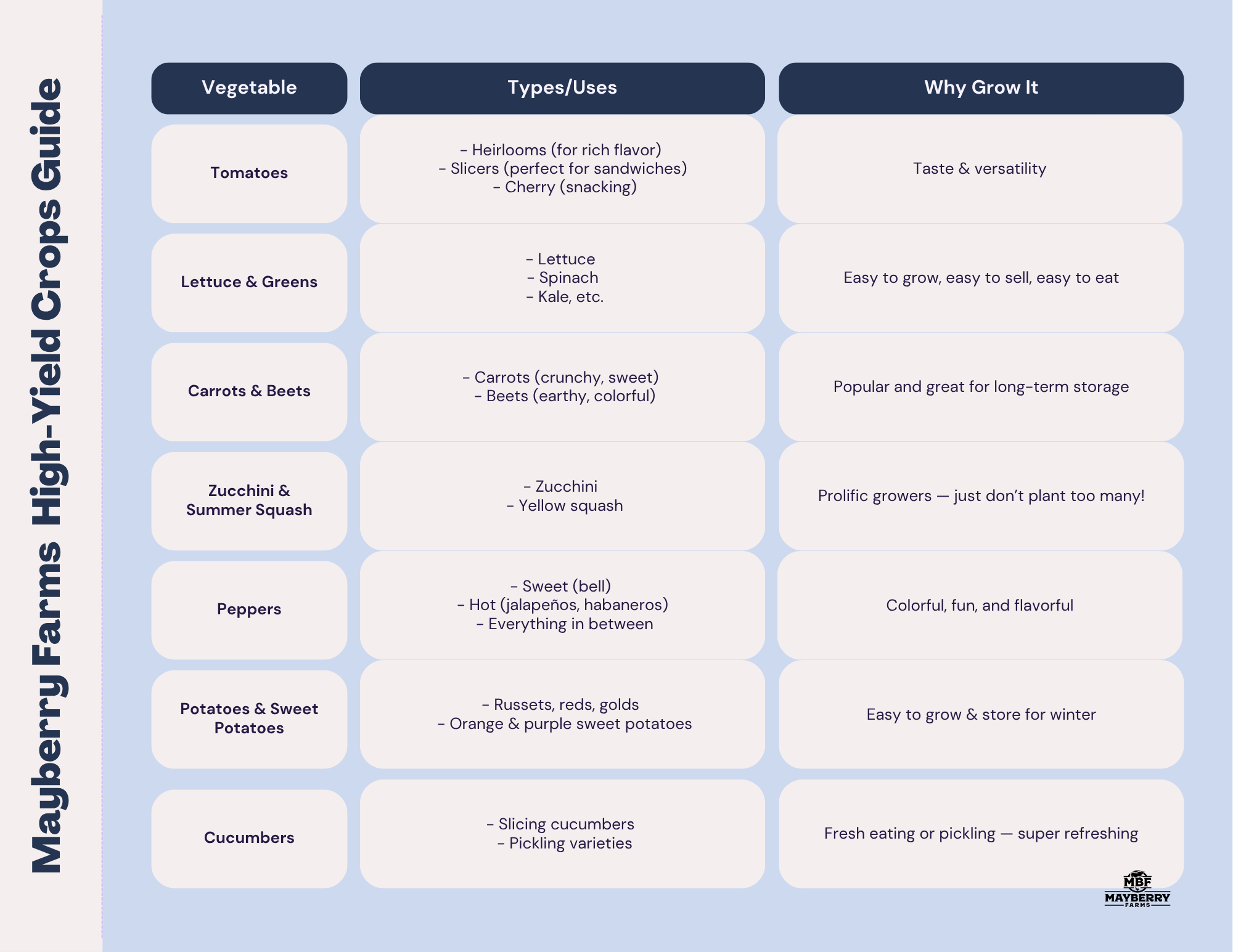
High-Yield & In-Demand Crops (For Selling & Eating)
Tomatoes (heirlooms for flavor, slicers for sandwiches, and cherry tomatoes for snacking)
Lettuce & Greens (easy to grow, sell, and eat)
Carrots & Beets (great storage crops, plus people love them)
Zucchini & Summer Squash (just… don’t overdo it)
Peppers (sweet, hot, and everything in between)
Potatoes & Sweet Potatoes (super easy and great for winter storage)
Cucumbers (for fresh eating and pickling)
Farmers Market Favorites
Herbs (basil, cilantro, parsley, and dill sell fast)
Garlic & Onions (low maintenance and easy to store)
Strawberries (people will pay good money for fresh berries)
Avoid These Mistakes
Don’t plant too much of one thing unless you have a guaranteed market.
Don’t experiment too much in your first year—stick to crops that grow well in your region.
Step 3: Garden Layout & Efficiency—Because You’re Not a Machine
Raised Beds vs. Traditional Rows vs. No-Till
Each method has pros and cons:
Raised Beds: Great for weed control, but takes effort to set up (I wrote about them here!).
Traditional Rows: Work well for large plantings, but require a lot of hoeing.
No-Till Gardening: Saves soil health, but requires lots of mulch and organic matter.
For a one-acre farm, a mix of methods works best:
Raised beds for greens, herbs, and delicate crops.
Traditional rows for potatoes, squash, and other space-hogs.
No-till methods for long-term soil health.
Step 4: Managing Weeds & Watering Without Losing Your Soul
Weeds: The Never-Ending Battle
The secret to weed control? Never let them get started.
Use mulch (straw, wood chips, or grass clippings).
Plant crops close together to shade out weeds.
Use a hoe or wheel hoe for quick weeding.
Watering: The Right Way
Forget daily watering—that just makes weak plants. Instead:
Deep water 2-3 times a week.
Drip irrigation or soaker hoses are best—overhead watering leads to disease.
Step 5: Selling Your Extra Produce Without the Stress
If you’re growing more than you can eat, it’s time to sell.
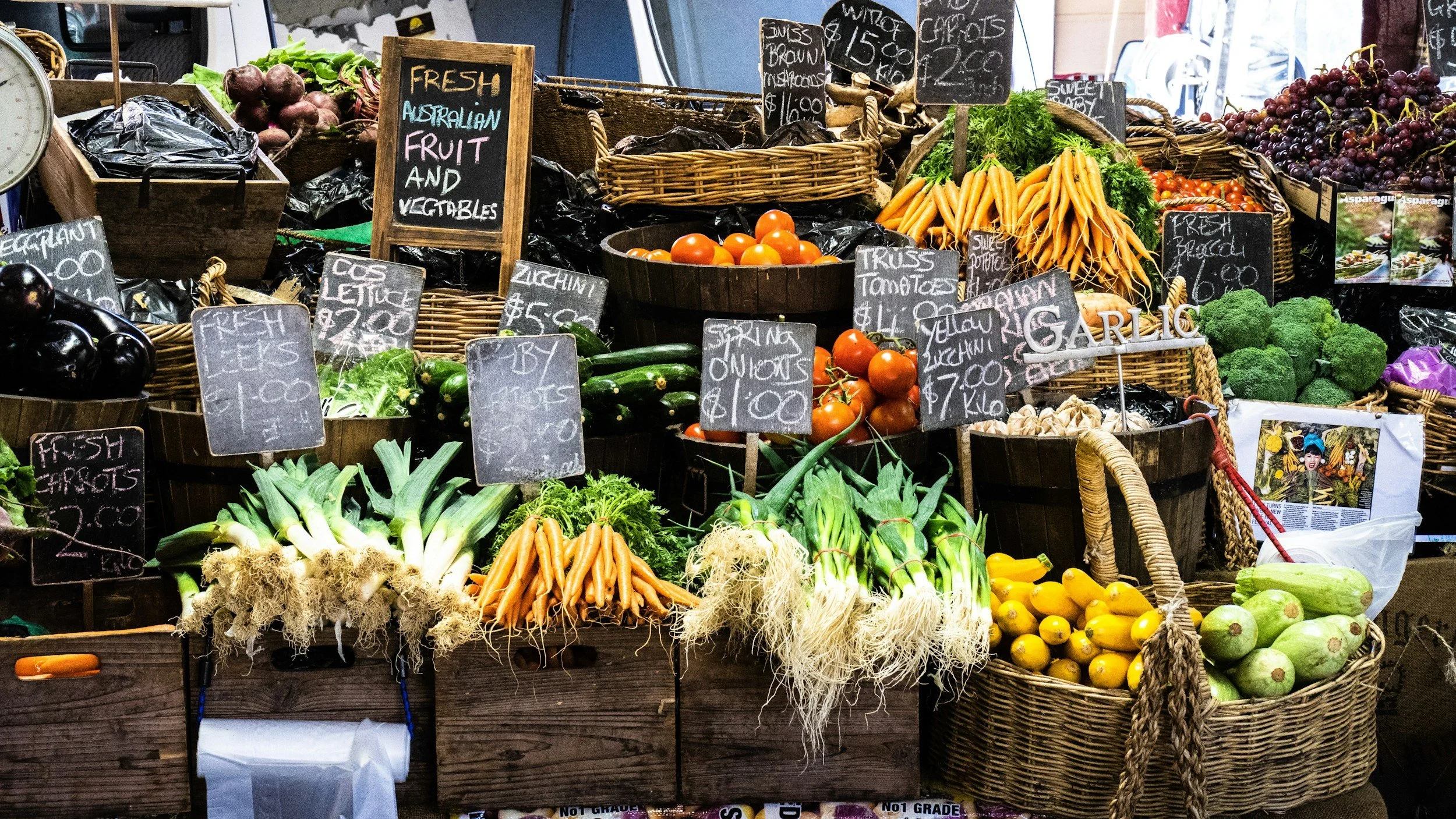
I think Farmers Markets are great because they allow you to interact with your local community and adjust what you choose to sell weekly.
Tips for Selling Successfully
Pretty produce sells! Take the time to clean, sort, and package it nicely.
People love variety. Offer a mix of veggies, herbs, and maybe even fresh eggs (especially in this economy - everyone is looking for eggs).
Have a plan for extras. If something doesn’t sell, can it, freeze it, or donate it.
Will a One-Acre Garden Keep You Fed and Make You Money? 🤔💰
Absolutely—IF you plan ahead, focus on soil health, grow the right crops, and manage your time wisely.
By mid-summer, you’ll be harvesting baskets full of tomatoes, peppers, and greens. By fall, you’ll have a pantry stocked with potatoes, onions, and maybe even homemade pickles (because let’s be honest, you’ll probably plant way too many cucumbers).
And sure, there will be moments when you question your sanity (like when you’re pulling weeds in 90-degree heat while your chickens watch from the shade, judging you). But when you sit down to a meal made entirely from your own garden, it will all be worth it.